
Official website of the commune

Tag: Gathering

  • Cérémonie du 11 novembre 2026 : le message lu au monument aux morts

    11 November 2026 ceremony: the message read at the war memorial

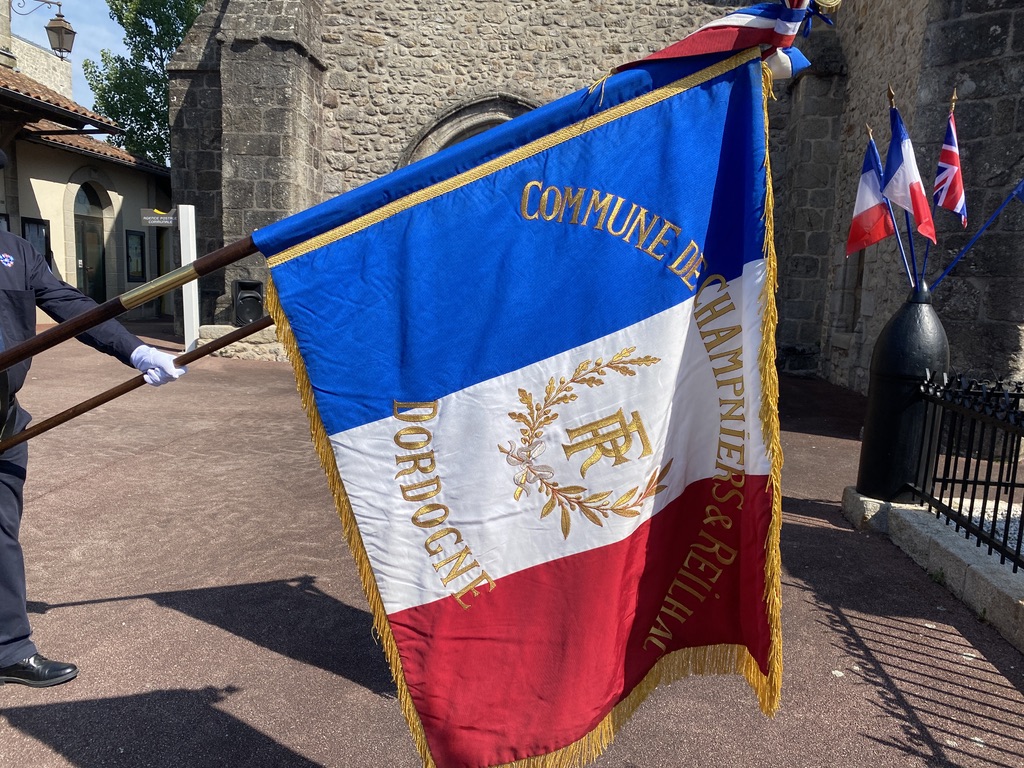
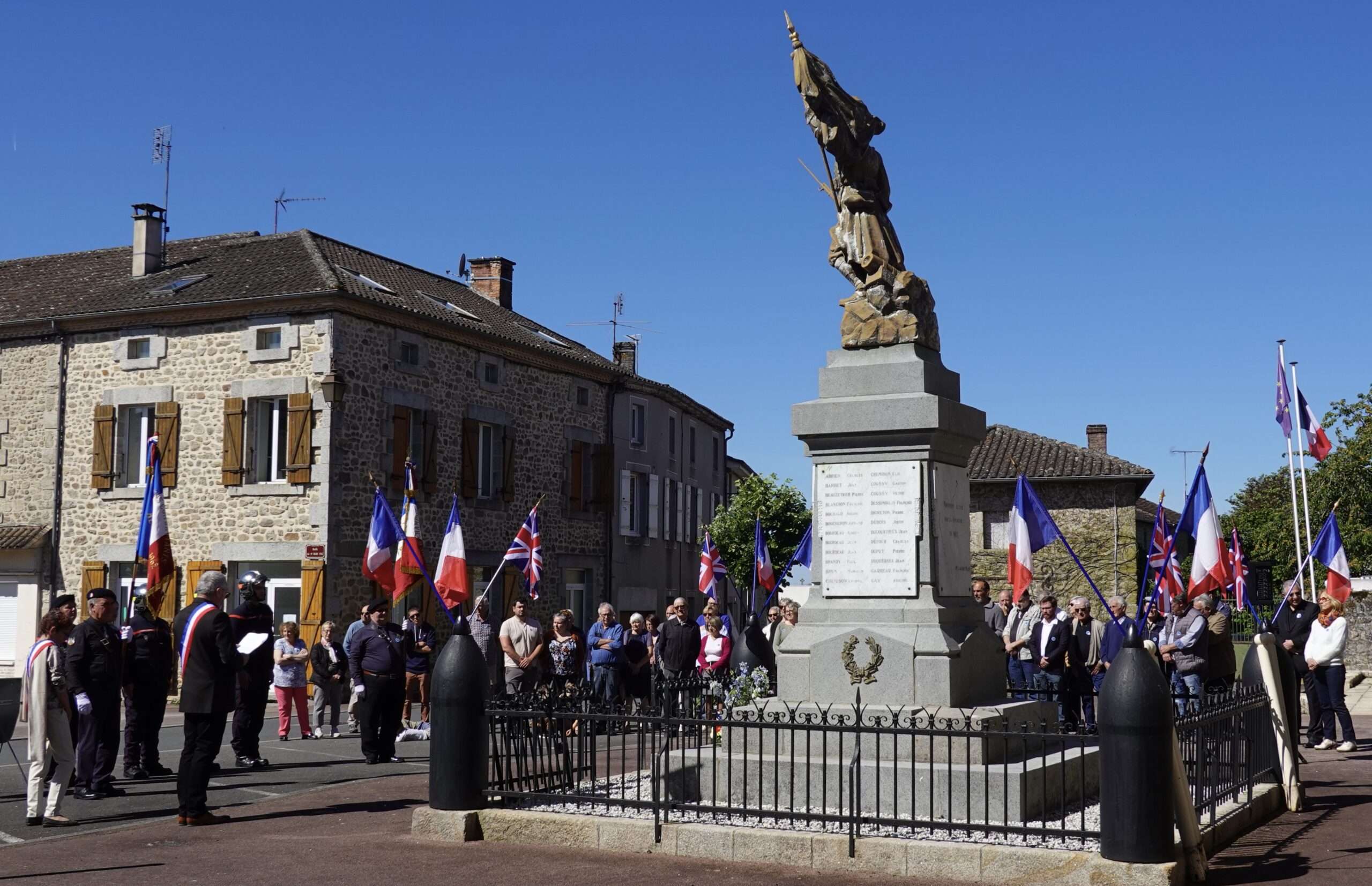
    The Wednesday 11 November 2026, at 11 am, a ceremony was held at the Champniers-et-Reilhac war memorial to commemorate the 1918 Armistice and pay tribute to all those who “died for France”.

    The ceremony was followed by drinks at the mairie.

    The message read at the ceremony

    As in every commune in France, the official message from the ministers responsible for the Armed Forces and Veterans was read in front of the war memorial. It recalls the end of the First World War, 108 years ago, and pays tribute to all the soldiers who have died for France since.

    Read the full message

    Every ceremony is a promise kept to eternity.

    That is why every 11 November, in every commune in France, we remember those who fell.

    One hundred and eight years ago, at eleven o’clock, bugles and church bells announced the armistice. After four years of war, the poilus (French infantrymen) climbed out of the trenches into the daylight. At the window of his office in the War Ministry, Clemenceau saluted the jubilant crowds of Parisians. It was also the joy of Alsace and Lorraine regained.

    Yet a great many families mourned the one they had let go and who would not come back. One million four hundred thousand French soldiers had lost their lives. Millions of others would have to learn to live again.

    Victory had kept France standing. But the war had disfigured it, from the ruins of Arras to the plains of Champagne, and even the faces of those returning from the front.

    This year, in 2026, one hundred and ten years after the Battle of Verdun, we find their traces in the soil of the Meuse, among the trees of the Bois des Caures, in the ruins of Fleury-devant-Douaumont. In 2027, from the Chemin des Dames to Vimy and La Malmaison, we will follow in their footsteps once more.

    The memory of the soldiers of 1914 unites us with all the generations who, after them, gave their lives for France under fire.

    Those of the Second World War. Those of Indochina, Korea, the Algerian War and the fighting in Morocco and Tunisia. Those of overseas operations, right up to the service personnel who fell in the line of duty.

    Again this year, Major Arnaud Frion, Warrant Officer Florian Montorio, Sergeant Anicet Girardin, Chief Warrant Officer Thibaud Breteau and Corporal Florian Gillet died for France. Their names join “Ceux de 14” (the men of 1914) and all those we honour today.

    Soldiers, sailors, airmen, gendarmes, fighters of every background: all have their place in our memory, which rests in the ever-rekindled flame of the Unknown Soldier. The Nation watches over their memory.

    To you, the families and comrades in arms of our dead, we owe respect and support. To our wounded, in body and mind, our solidarity and our gratitude.

    In 2027, we will honour the memory of Marshal Leclerc. Through the figure of the leader he embodies, we celebrate that of the fighter who scorns danger, faithful to his comrades in arms and to his flag.

    Sixty years after the launch of the Redoutable, our first nuclear ballistic missile submarine, we will salute the sailors who, in the silence of the depths, keep our deterrent permanently on watch and allow France to remain master of its own destiny.

    “Win in order to be just,” declared Georges Clemenceau in 1917, before leading the country to victory. That demand still binds us. In Ukraine, in the face of Russian aggression, France stands alongside a country defending its land and its freedom. All over the world, it stands alongside its allies.

    Today, before our war memorials, let us measure the price of our freedom and remember.

    Let us remember that France belongs to all who love it and serve it.

    Let us remember that we are the guardians of its unique history.

    Let us remember that looking to the past means drawing the strength to look to the future together. It means drawing on the courage of those who came before us.

    May our young people take up this heritage and keep it alive in their turn.

    Long live the Republic!
    Long live France!

    Catherine Vautrin, Minister for the Armed Forces and Veterans, and Alice Rufo, Minister Delegate to the Minister for the Armed Forces and Veterans.
  • Cérémonie du 8 mai 1945

    8 May 1945 ceremony

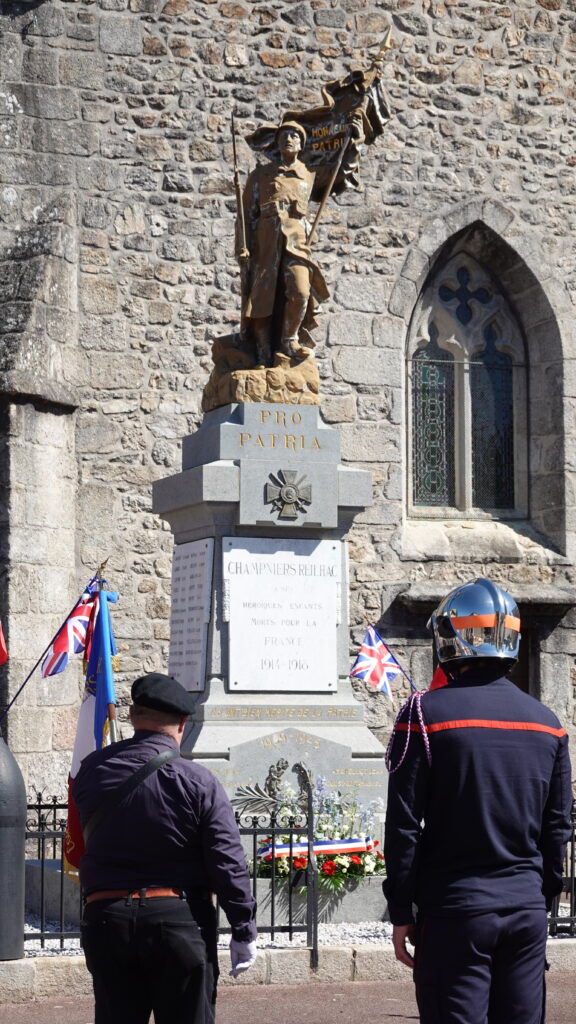
    Speech by Ms Catherine Vautrin, Minister for the Armed Forces and Veterans, read at the commemoration ceremony on 8 May 2026 in Champniers-et-Reilhac.

    81 years ago, during the night of 6 to 7 May, in Reims, Germany’s unconditional surrender was signed.

    On 8 May 1945, at last, after years of hardship, horror and fighting, Europe was freed from the grip of Nazi totalitarianism and genocide.

    Freed by all the Allies. Freed with the help of the armies of France, “the only France, [the one] that fights” and does not surrender.

    Let us never forget: before it was a military defeat, the defeat of 1940 was first a defeat of the spirit.

    Marc Bloch — historian, soldier in 1914, volunteer again in 1939, shot in June 1944 — passed this unsparing judgement on those responsible for the collapse: they had “very early on considered it natural to be beaten”.

    Those who went on believing in France were not supermen.

    They were the one hundred and thirty-three fishermen of the Île de Sein, the first fifty-two women volunteers from Saint-Pierre-et-Miquelon. They were Jacques Lusseyran, a blind 16-year-old schoolboy who gathered the Volunteers of Liberty around him, before being deported to Buchenwald.

    They were women and men of all ages, all backgrounds and all beliefs, with their fears and their doubts, but united by the same demand: not to submit, not to give in.

    This resolve was first of all to resist the denial of law and justice.

    “From 3 September 1939,” General de Gaulle recalled, “we drew the sword, alone with England, to defend the law violated in the form of Poland.”

    In London, under the bombs of the Blitz, and in Brazzaville, where the Order of Liberation was created, the struggle went on, led by those who sensed that this conflict was a war against humanity.

    As we celebrate 400 years of the French Navy, let us remember Admiral Muselier, who joined Free France in 1940 and gave it its emblem: the Cross of Lorraine.

    Let us remember the submariners of the Casabianca, who slipped past the enemy to arm the Resistance in Corsica.

    And after them, all the generations of sailors who today carry on our naval power with the aircraft carrier France Libre.

    Let us remember the Kieffer commandos, who landed at dawn on 6 June 1944.

    Let us honour, on the beaches of Provence, the soldiers who came from Africa, Asia and the Pacific — tirailleurs, goumiers and spahis of the French First Army led by General de Lattre de Tassigny, who fought their way to Berlin.

    De Lattre who, faced with what he called “the many powers of lies”, would say: “we discovered the full value of our civilisation by experiencing its fragility.”

    Let us remember Simone Veil, an Auschwitz survivor, who devoted her life to reconciliation and peace: the European ideal she left us was the answer to hatred through the force of law.

    This victory was a victory for respect of every people’s sovereignty and every person’s dignity, against those who wanted to reduce our continent to an empire of masters and slaves.

    Today, so that the worst may never again become possible, it is our duty — as the last witnesses leave us — to pass on to the young people setting out in life the “active patriotism” that General Leclerc entrusted to the men of the 2nd Armoured Division when he bade them farewell.

    To pass on this moral strength, the first weapon of a people who, on the edge of the abyss, knew how to rise again.

    A people, ours, whom “neither military misfortune, nor the collapse of institutions, nor lies, nor violence could turn away from its eternal calling”. (Charles de Gaulle, speech to the National Assembly, 15 May 1945).

    Long live free Europe. Long live the Republic. And long live France!

    — Catherine Vautrin, Minister for the Armed Forces and Veterans

    Photo du monument aux morts lors de la cérémonie du 8 mai 1945 avec un porteur de drapeau et un pompier