Official website of the commune

Category: News

Informations générales et actualités de la commune

  • Urbanisme : vous pouvez donner votre avis sur le PLUi-H

    Planning: you can give your opinion on the PLUi-H

    Are you planning to build? Do you wonder what you will be allowed to do on your land in the coming years? Then this document concerns you, and you can still give your opinion.

    What is the PLUi-H?

    PLUi-H stands for Plan local d’urbanisme intercommunal valant programme local de l’habitat (intercommunal local development plan, including the local housing programme). It is a document that sets out what can be built, and where, in all the communes of the Périgord Nontronnais. It also sets out the main housing policies.

    Once approved, it will govern residents’ building projects for the next fifteen years. So it matters.

    Where is the project now?

    The community of communes started this work in 2021, with councillors and residents. At the end of 2025, the community council adopted a first draft of the plan.

    This draft was then sent for comment to the communes and the public bodies concerned: State services, the Périgord-Limousin Regional Nature Park, the Dordogne departmental council, the chamber of agriculture and the body in charge of the Périgord Vert territorial coherence plan (SCoT).

    The draft must now be adopted a second time. Councillors are using this stage to take these comments into account and to adjust the document with the new municipal teams. These adjustments will continue until the end of 2026.

    The community of communes states that the main policies of the first draft are kept. These are targeted adjustments, not a fresh start.

    The public consultation has reopened

    This is the key point for residents. As the draft must be adopted again, everyone can still share their comments.

    You can make a suggestion about the plan, or a request about your land — for example if you would like the building rights on it to change.

    There are two ways to do this. You can leave a note in the consultation box at the town hall. You can also write to the community of communes: consultation, at the community of communes.

    If you are writing about a plot of land, give its address and, if you know it, its plot number (numéro de parcelle). This helps identify the land without any mistake.

    What happens next?

    A public meeting will be held before the community council adopts the draft a second time. We will give you the date as soon as we know it.

    The public bodies will then be consulted again, followed by thepublic inquiry : the full file will then be available and everyone will be able to write down their comments. Final approval of the PLUi-H is expected in 2027.

    To find out more about the community of communes and what it does, see the page Community of communes.

    The community of communes’ document

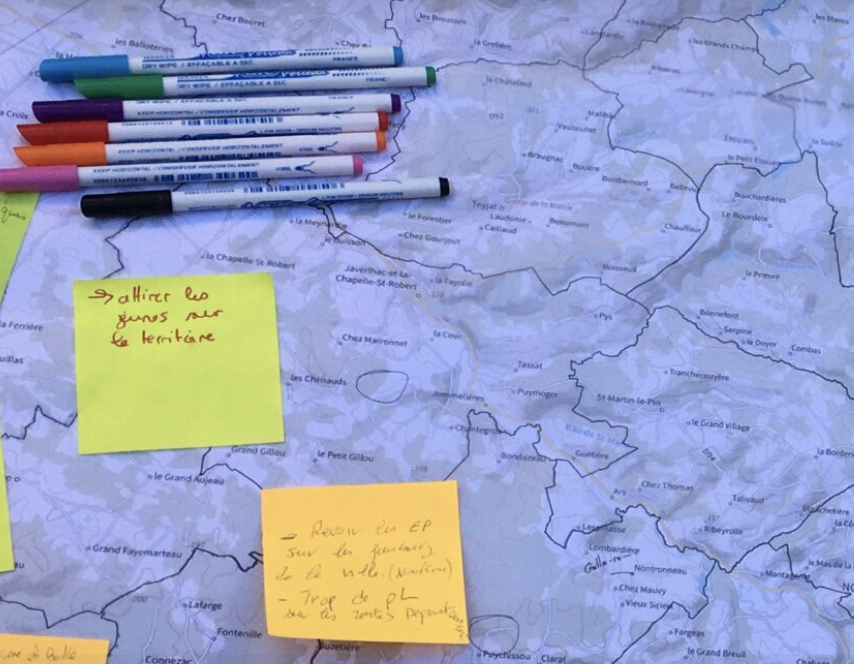
    The community of communes has published a two-page information note (in French), with the planned timetable up to the approval of the PLUi-H.
    Resumption of the PLUi-H: the community of communes’ information note (PDF in French, 2 pages, 421 KB, new window)

  • Fin des restrictions d’eau : continuons à économiser l’eau

    Water restrictions lifted: let’s keep saving water

    Update as of 13 November 2026. There are no longer any water restrictions in our commune. This applies to tap water and also to water taken from a well, a borehole, a pond or a stream.

    What this means for you

    You can once again water your garden, fill a swimming pool or wash a car, at any time of day.

    Restrictions on tap water have been lifted since 10 October 2026. Those on wells, boreholes, ponds and streams (Tardoire basin) no longer apply either.

    Water is still precious: let’s keep up the good habits

    Groundwater and rivers take time to refill after a dry summer. Every litre saved helps us get through next summer more easily.

    Finding and fixing a leak, even a small one, often saves more water than all the other habits put together. A dripping tap can waste more than 100 litres a day.

    Collecting rainwater in a water butt or a simple tub lets you water the garden without using mains water.

    Watering early in the morning or after dark stops the water evaporating. Mulch around your plants keeps the soil moist for longer.

    Taking a shower rather than a bath, and turning off the tap while you brush your teeth or do the washing-up, are simple habits that make a difference.

    If new restrictions come in

    In a drought, the prefecture can limit water use again. The town hall will let you know here, on the website.

    To check for yourself at any time, the VigiEau website is the easiest way: enter your address and it tells you what applies where you live (in French). You can also see the list of official orders on the website of the State services in the Dordogne.

    If you do not use the internet, call the town hall on 05 53 56 42 67.

    Thank you all: together, let’s protect our water.

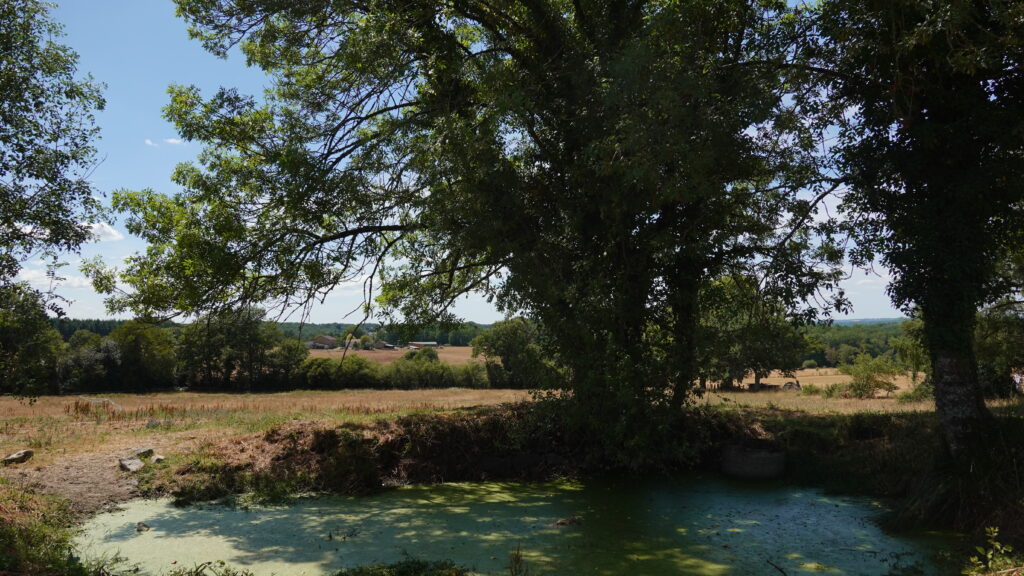
    Étang au niveau d'eau très bas à Champniers-et-Reilhac, été 2026
  • Débroussaillement obligatoire : ce que vous devez savoir

    Compulsory brush clearing: what you need to know

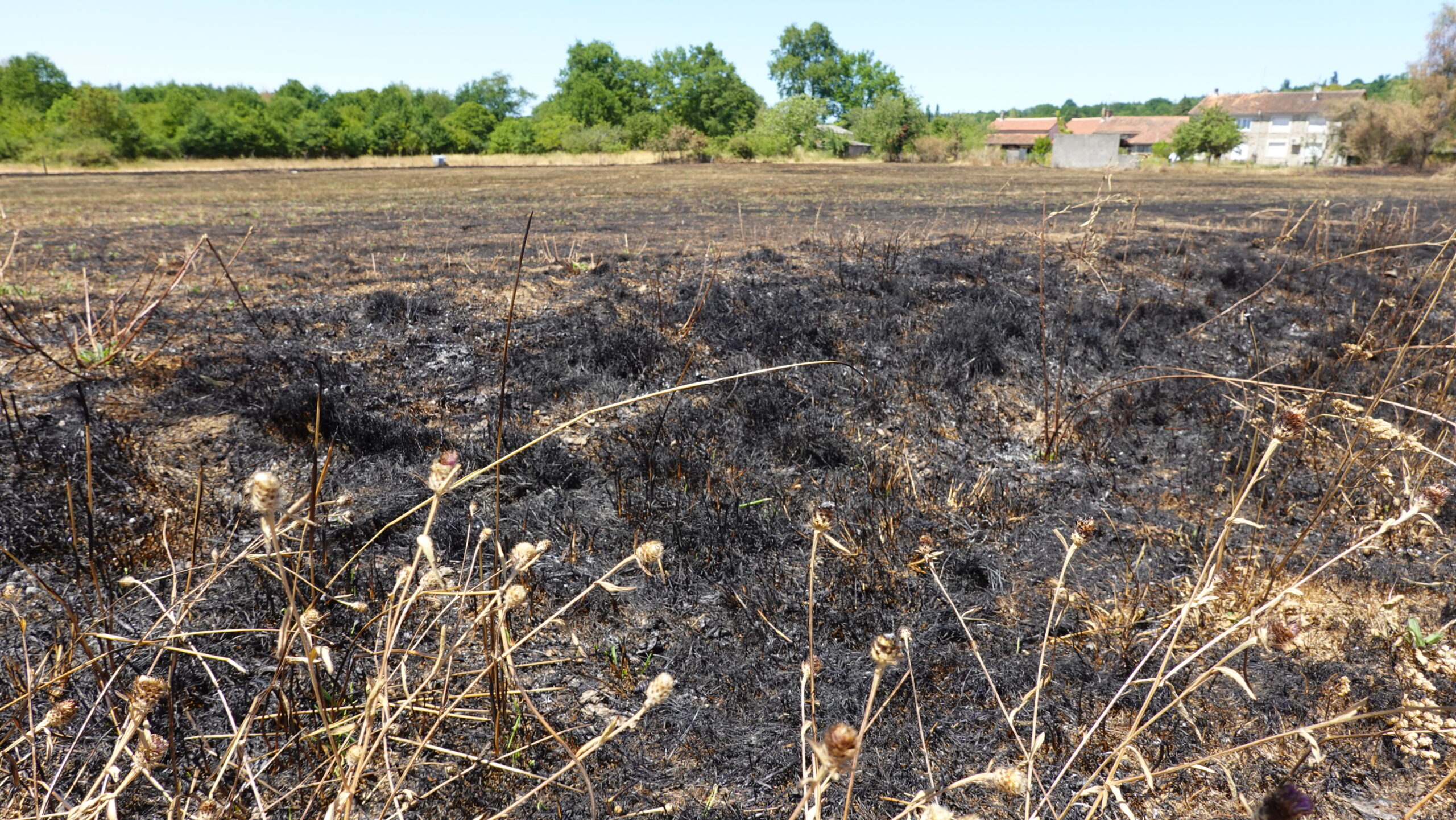
    If your land is less than 200 m from a wood or forest, you must follow the legal brush-clearing obligations (OLD, obligations légales de débroussaillement) set by prefectoral order: 50 m around buildings, 4 m along private roads, and full clearing in built-up areas (zone U of the local plan).

    The mayor is responsible for checking these obligations and, after a formal notice, can have the work carried out at the owner’s expense.

  • Cérémonie du 8 mai 1945

    8 May 1945 ceremony

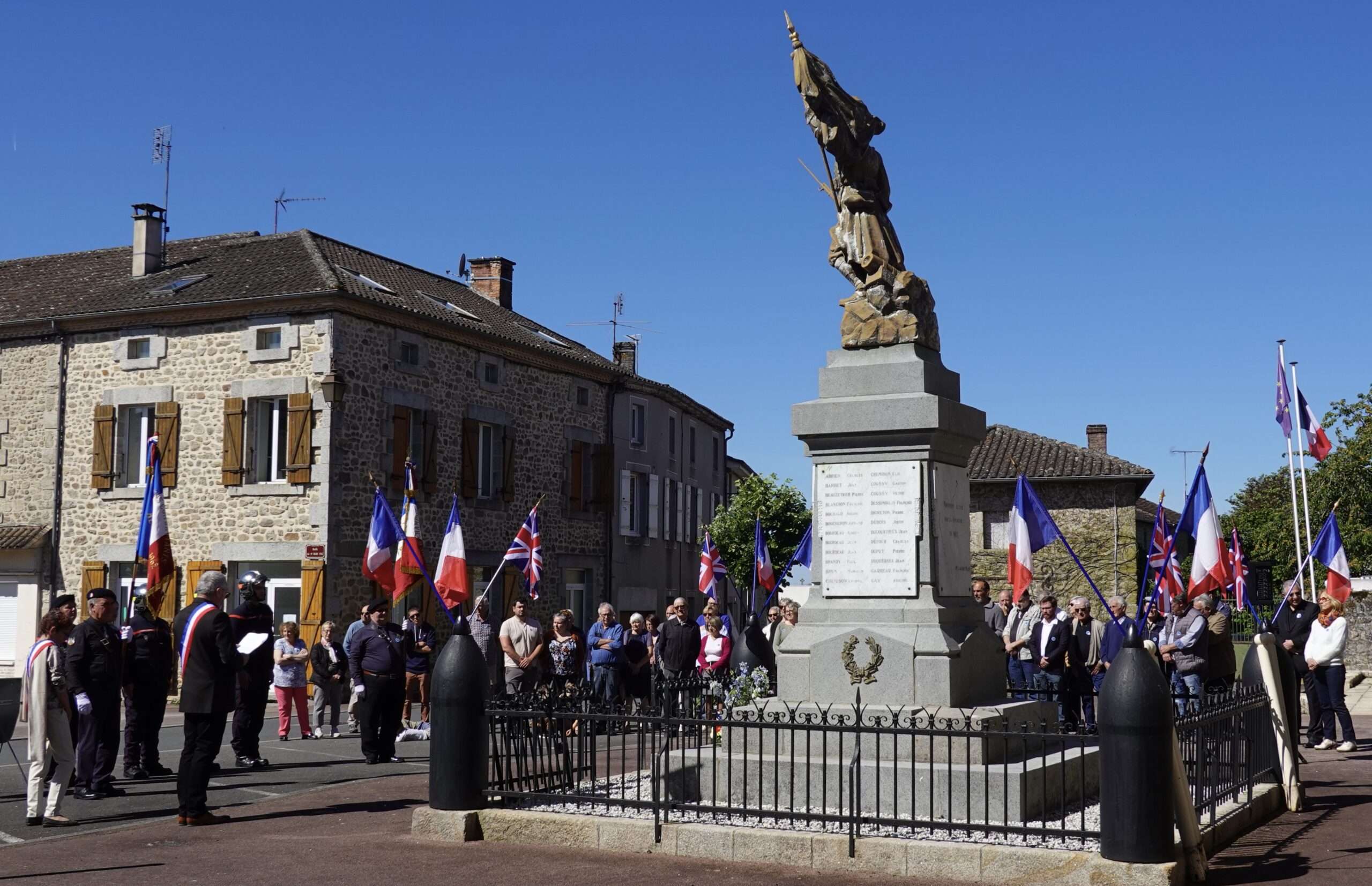
    Speech by Ms Catherine Vautrin, Minister for the Armed Forces and Veterans, read at the commemoration ceremony on 8 May 2026 in Champniers-et-Reilhac.

    81 years ago, during the night of 6 to 7 May, in Reims, Germany’s unconditional surrender was signed.

    On 8 May 1945, at last, after years of hardship, horror and fighting, Europe was freed from the grip of Nazi totalitarianism and genocide.

    Freed by all the Allies. Freed with the help of the armies of France, “the only France, [the one] that fights” and does not surrender.

    Let us never forget: before it was a military defeat, the defeat of 1940 was first a defeat of the spirit.

    Marc Bloch — historian, soldier in 1914, volunteer again in 1939, shot in June 1944 — passed this unsparing judgement on those responsible for the collapse: they had “very early on considered it natural to be beaten”.

    Those who went on believing in France were not supermen.

    They were the one hundred and thirty-three fishermen of the Île de Sein, the first fifty-two women volunteers from Saint-Pierre-et-Miquelon. They were Jacques Lusseyran, a blind 16-year-old schoolboy who gathered the Volunteers of Liberty around him, before being deported to Buchenwald.

    They were women and men of all ages, all backgrounds and all beliefs, with their fears and their doubts, but united by the same demand: not to submit, not to give in.

    This resolve was first of all to resist the denial of law and justice.

    “From 3 September 1939,” General de Gaulle recalled, “we drew the sword, alone with England, to defend the law violated in the form of Poland.”

    In London, under the bombs of the Blitz, and in Brazzaville, where the Order of Liberation was created, the struggle went on, led by those who sensed that this conflict was a war against humanity.

    As we celebrate 400 years of the French Navy, let us remember Admiral Muselier, who joined Free France in 1940 and gave it its emblem: the Cross of Lorraine.

    Let us remember the submariners of the Casabianca, who slipped past the enemy to arm the Resistance in Corsica.

    And after them, all the generations of sailors who today carry on our naval power with the aircraft carrier France Libre.

    Let us remember the Kieffer commandos, who landed at dawn on 6 June 1944.

    Let us honour, on the beaches of Provence, the soldiers who came from Africa, Asia and the Pacific — tirailleurs, goumiers and spahis of the French First Army led by General de Lattre de Tassigny, who fought their way to Berlin.

    De Lattre who, faced with what he called “the many powers of lies”, would say: “we discovered the full value of our civilisation by experiencing its fragility.”

    Let us remember Simone Veil, an Auschwitz survivor, who devoted her life to reconciliation and peace: the European ideal she left us was the answer to hatred through the force of law.

    This victory was a victory for respect of every people’s sovereignty and every person’s dignity, against those who wanted to reduce our continent to an empire of masters and slaves.

    Today, so that the worst may never again become possible, it is our duty — as the last witnesses leave us — to pass on to the young people setting out in life the “active patriotism” that General Leclerc entrusted to the men of the 2nd Armoured Division when he bade them farewell.

    To pass on this moral strength, the first weapon of a people who, on the edge of the abyss, knew how to rise again.

    A people, ours, whom “neither military misfortune, nor the collapse of institutions, nor lies, nor violence could turn away from its eternal calling”. (Charles de Gaulle, speech to the National Assembly, 15 May 1945).

    Long live free Europe. Long live the Republic. And long live France!

    — Catherine Vautrin, Minister for the Armed Forces and Veterans

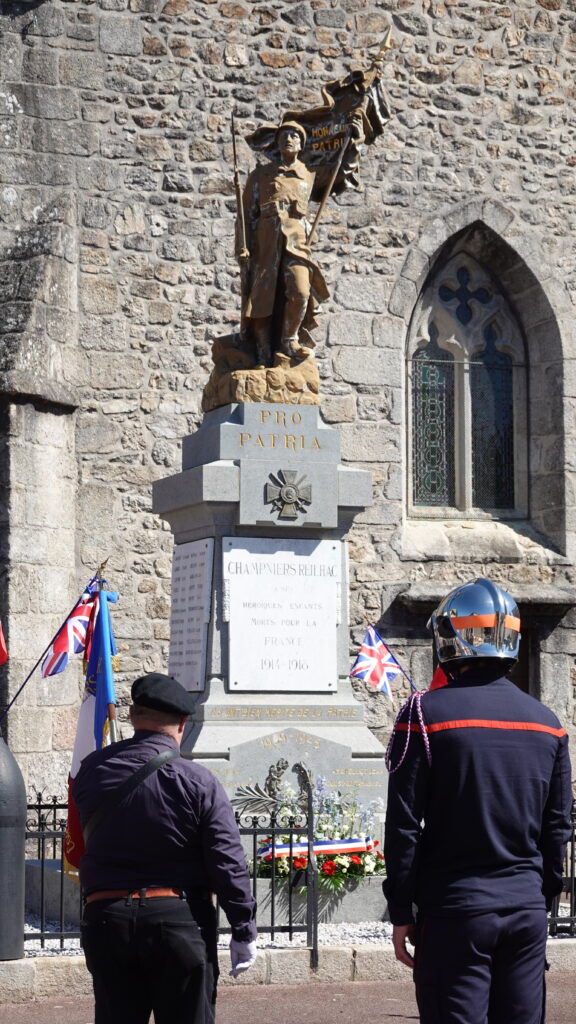
    Photo du monument aux morts lors de la cérémonie du 8 mai 1945 avec un porteur de drapeau et un pompier