The minutes of three council meetings have just been published online: those of 5 June, 18 June and 30 July 2026.
Each document sets out the resolutions and decisions taken at that meeting. The minutes are in French. You can find them, with the list of topics discussed and all the minutes for the year, on the page Official documents.
The minutes (procès-verbaux) of council meetings are available on our dedicated page, in the Official documents section. For each meeting, you will find details of the council’s decisions and resolutions. The minutes are in French. The page is updated after each new meeting.
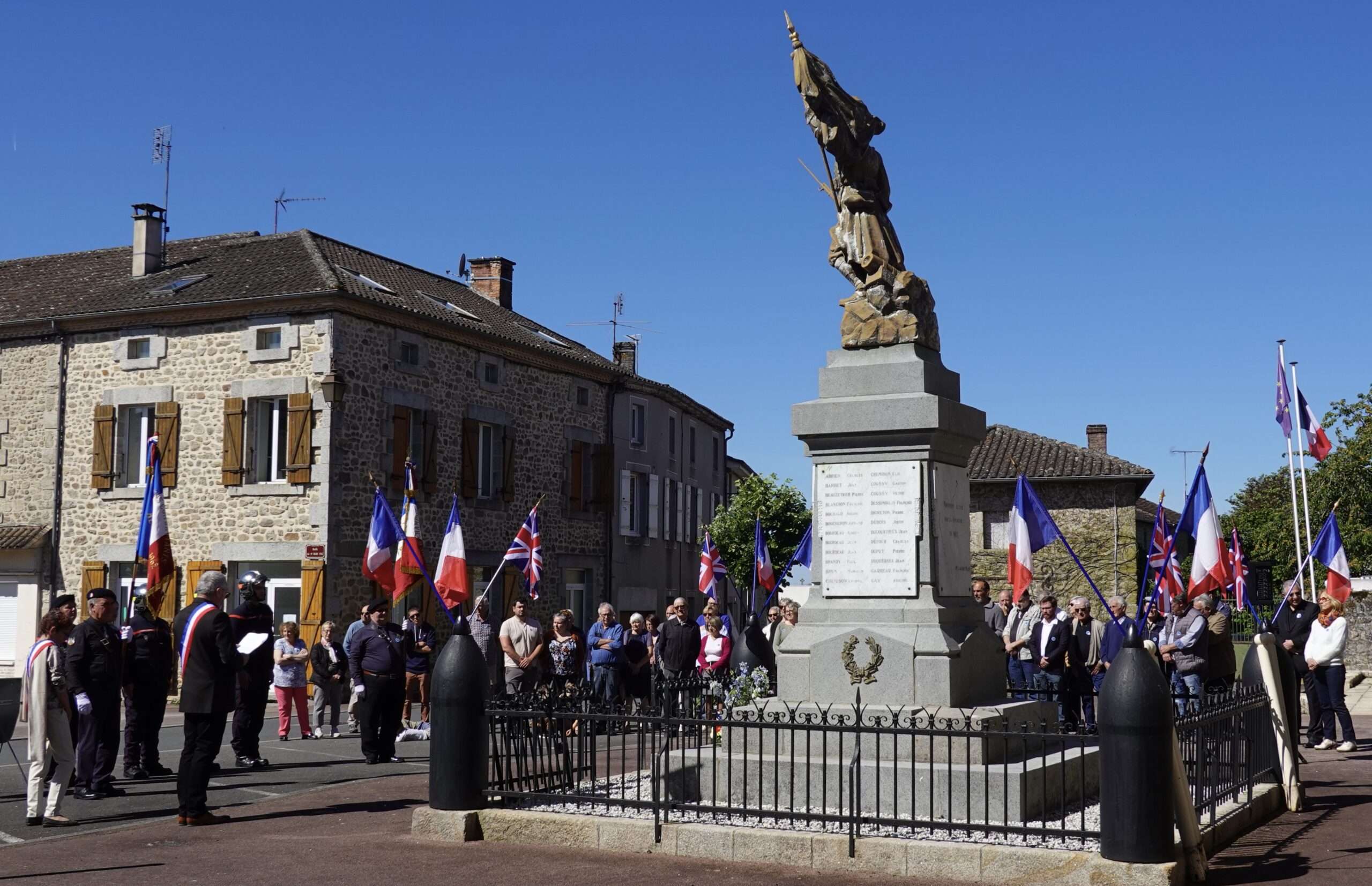
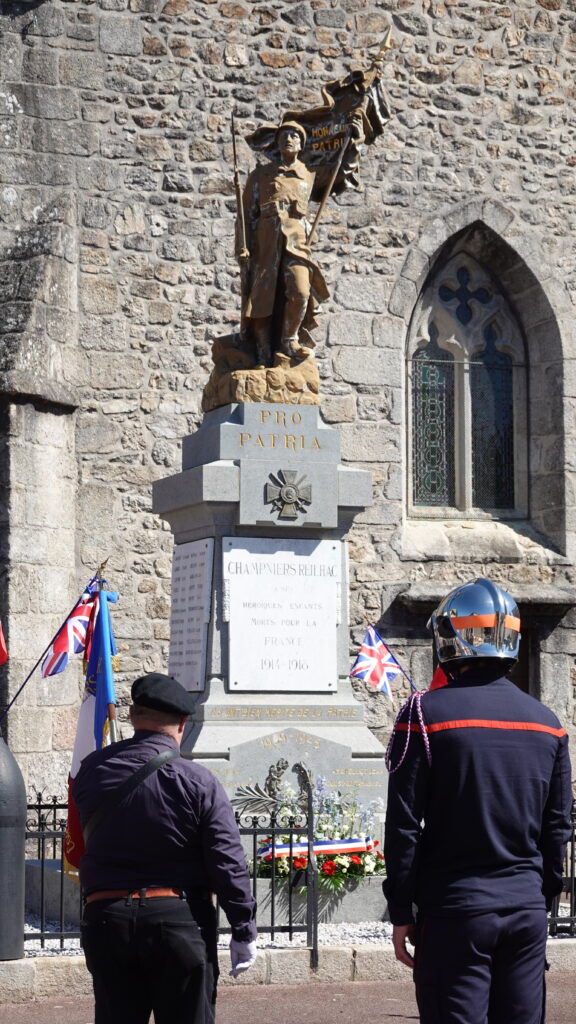
Speech by Ms Catherine Vautrin, Minister for the Armed Forces and Veterans, read at the commemoration ceremony on 8 May 2026 in Champniers-et-Reilhac.
81 years ago, during the night of 6 to 7 May, in Reims, Germany’s unconditional surrender was signed.
On 8 May 1945, at last, after years of hardship, horror and fighting, Europe was freed from the grip of Nazi totalitarianism and genocide.
Freed by all the Allies. Freed with the help of the armies of France, “the only France, [the one] that fights” and does not surrender.
Let us never forget: before it was a military defeat, the defeat of 1940 was first a defeat of the spirit.
Marc Bloch — historian, soldier in 1914, volunteer again in 1939, shot in June 1944 — passed this unsparing judgement on those responsible for the collapse: they had “very early on considered it natural to be beaten”.
Those who went on believing in France were not supermen.
They were the one hundred and thirty-three fishermen of the Île de Sein, the first fifty-two women volunteers from Saint-Pierre-et-Miquelon. They were Jacques Lusseyran, a blind 16-year-old schoolboy who gathered the Volunteers of Liberty around him, before being deported to Buchenwald.
They were women and men of all ages, all backgrounds and all beliefs, with their fears and their doubts, but united by the same demand: not to submit, not to give in.
This resolve was first of all to resist the denial of law and justice.
“From 3 September 1939,” General de Gaulle recalled, “we drew the sword, alone with England, to defend the law violated in the form of Poland.”
In London, under the bombs of the Blitz, and in Brazzaville, where the Order of Liberation was created, the struggle went on, led by those who sensed that this conflict was a war against humanity.
As we celebrate 400 years of the French Navy, let us remember Admiral Muselier, who joined Free France in 1940 and gave it its emblem: the Cross of Lorraine.
Let us remember the submariners of the Casabianca, who slipped past the enemy to arm the Resistance in Corsica.
And after them, all the generations of sailors who today carry on our naval power with the aircraft carrier France Libre.
Let us remember the Kieffer commandos, who landed at dawn on 6 June 1944.
Let us honour, on the beaches of Provence, the soldiers who came from Africa, Asia and the Pacific — tirailleurs, goumiers and spahis of the French First Army led by General de Lattre de Tassigny, who fought their way to Berlin.
De Lattre who, faced with what he called “the many powers of lies”, would say: “we discovered the full value of our civilisation by experiencing its fragility.”
Let us remember Simone Veil, an Auschwitz survivor, who devoted her life to reconciliation and peace: the European ideal she left us was the answer to hatred through the force of law.
This victory was a victory for respect of every people’s sovereignty and every person’s dignity, against those who wanted to reduce our continent to an empire of masters and slaves.
Today, so that the worst may never again become possible, it is our duty — as the last witnesses leave us — to pass on to the young people setting out in life the “active patriotism” that General Leclerc entrusted to the men of the 2nd Armoured Division when he bade them farewell.
To pass on this moral strength, the first weapon of a people who, on the edge of the abyss, knew how to rise again.
A people, ours, whom “neither military misfortune, nor the collapse of institutions, nor lies, nor violence could turn away from its eternal calling”. (Charles de Gaulle, speech to the National Assembly, 15 May 1945).
Long live free Europe. Long live the Republic. And long live France!
— Catherine Vautrin, Minister for the Armed Forces and Veterans
During this term of office, the new council team, with its vision of the common good, will help shape the future of our villages and our community. Our commitment will be guided by one essential ambition: to strengthen what brings residents together, to build connections, to encourage solidarity and to carry out projects that are useful in everyday life.
Being a local councillor means giving time and energy, and sometimes facing difficult choices, in order to meet residents’ expectations and build the future of our area. In this task, the mayor plays a central role. Beyond managing and overseeing the council services, with the support of the deputy mayors and councillors, the mayor is above all the guardian of shared projects and represents the commune with its institutional partners.
The mayor’s role is to set a direction, to drive things forward, to promote a vision of living together and to stand by decisions taken in the general interest. This responsibility can only be carried out by remaining true to the values at the heart of public service: being close to people, listening and serving residents.
Councillors come and go over time, but the town hall remains. Heir to the work of those who came before us, it is an essential landmark in local life. More than just an administrative building, the town hall is a place close to you, where every resident is welcomed, listened to and recognised as an individual.
Every day, Maryse, Nadège, Benoît and Adrian, each in their own role, keep this local public service alive. Their commitment, together with that of the village associations, helps to strengthen the bonds that unite our area: between generations, between newcomers and long-standing residents, and between the most vulnerable and those who support them.